
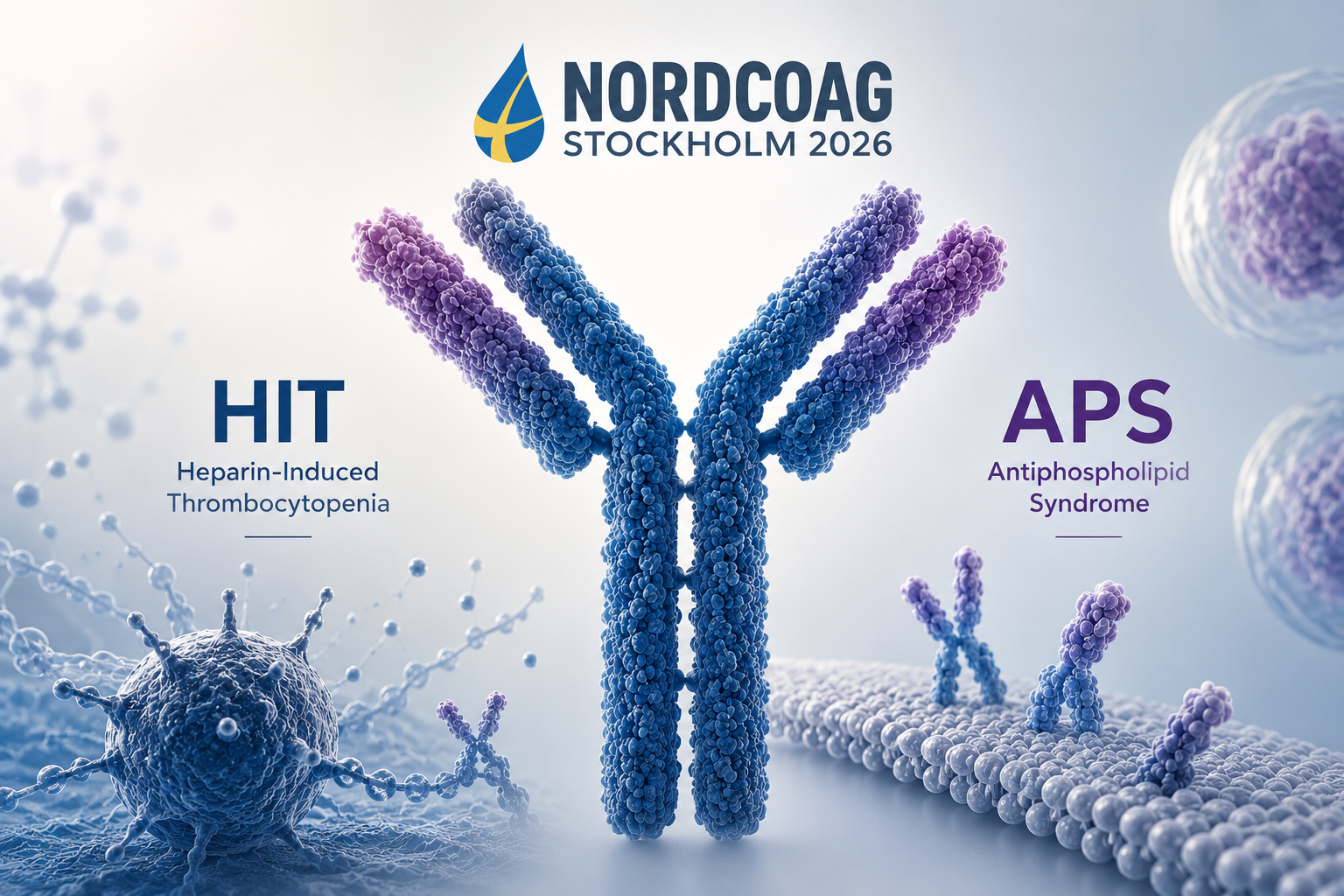
Pre-Congress Course, Wednesday, 18 September 9:00-12:00
Sune Bergsstöm Aula
Register here. Lunch included
Key Learning Objectives:
- Current Diagnostic Strategies: Understanding the latest algorithms for HIT and APS.
- Laboratory Methodologies: Insights into specialized testing and modern techniques.
- Interpretation of Results: Navigating challenges and pitfalls in complex findings.
- Clinical Management: Translating laboratory data into effective patient care.
- Clinical-Laboratory Interplay: Enhancing collaboration between clinicians and the lab.
Antiphospholipid Syndrome (APS)
- Laboratory diagnostics and assessment / Maria Farm
Current laboratory approaches in APS, including antiphospholipid antibody testing, analytical considerations, interpretation of laboratory profiles, and current challenges in diagnostic classification and clinical correlation. - Clinical perspectives and management / Natali Karandyszowska
Clinical manifestations and diagnostic evaluation of APS, with focus on thrombotic complications, risk stratification, and current therapeutic management strategies. - Interactive discussion and case-based reflections
Interactive session featuring clinical case discussions and deep dives into the complex interplay between laboratory findings and clinical decision-making.
Heparin-Induced Thrombocytopenia (HIT)
- Laboratory diagnostics and interpretation / Maria Farm
Laboratory evaluation of HIT, including immunological and functional assays, diagnostic algorithms, analytical limitations, and interpretation of test results in relation to clinical probability. - Clinical aspects and therapeutic management / TBD
Clinical presentation, pathophysiology, and diagnostic assessment of HIT including differential diagnosis and evidence-based anticoagulant management. - Interactive discussion and case-based reflections
Interactive session featuring clinical case discussions and deep dives into the complex interplay between laboratory findings and clinical decision-making.